
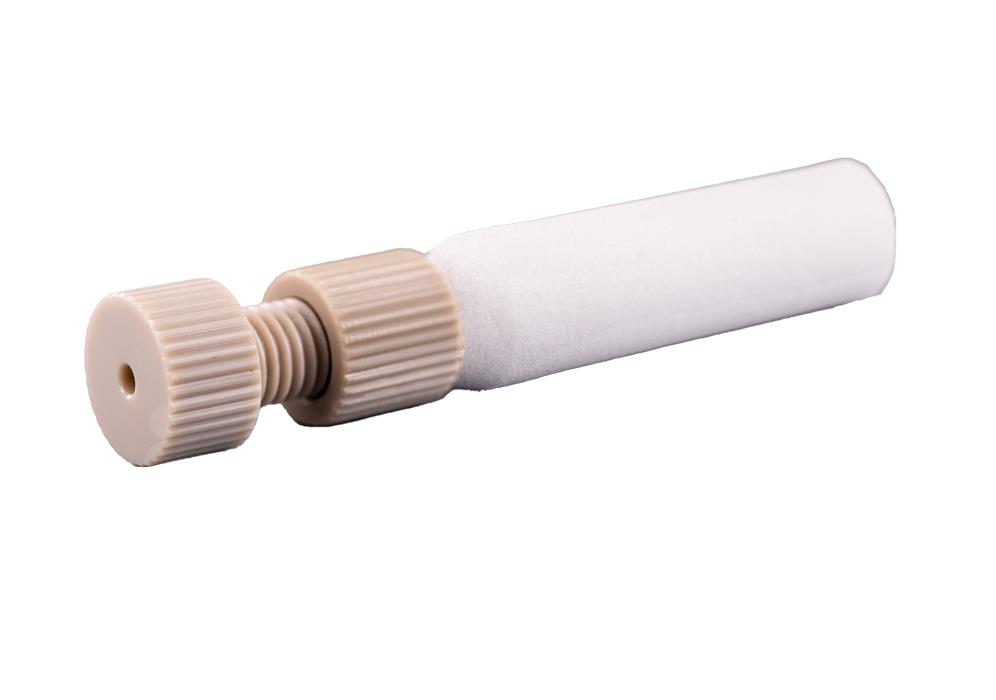
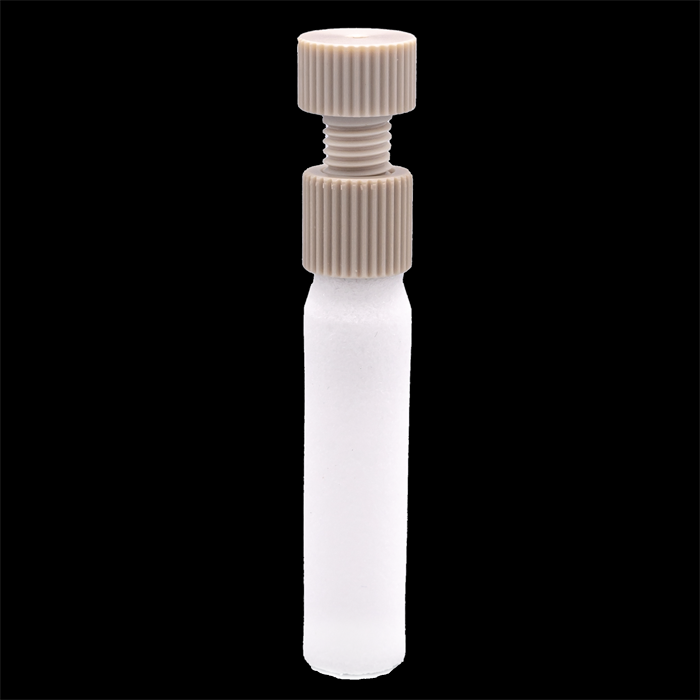
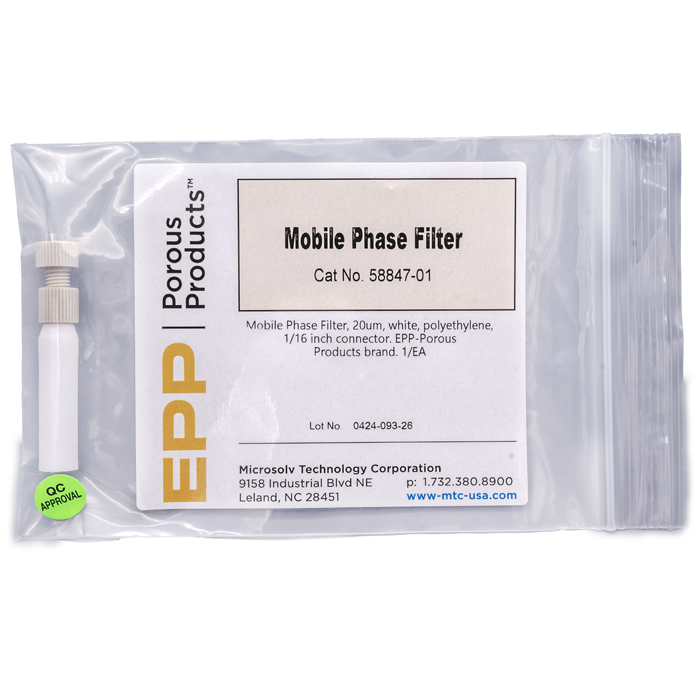
Mobile Phase Filter, 20 um, white, polyethylene, 1/16 inch connector. EPP-Porous Products brand. 5/PK.
Additional Information:
The 58847-01-005 EPP‑Porous Products Mobile Phase Filter is a polyethylene solvent pickup filter designed for HPLC reservoirs, offering high particulate capacity, low flow resistance, and reliable system protection.
With 20 µm porosity, it removes large undissolved particles, helping protect pumps, columns, and system components. The white filter body allows quick visual inspection of trapped debris, while the low resistance design ensures efficient solvent delivery compared to finer filters.
Designed for 1/16 inch (1.6 mm) tubing, the unit includes PEEK-compatible connection components for secure and consistent performance. The soft, replaceable filter element allows for easy maintenance and continued operation.
Key Features
20 µm High‑Capacity Filtration
Removes undissolved particulates
Protects HPLC pumps and columns
Low Flow Resistance
Less restriction than 2 µm or 10 µm filters
Supports efficient solvent uptake
Visible Contamination Monitoring
White filter enables quick visual inspection
Biocompatible Polyethylene Construction
Chemically compatible with common solvents
Durable and reliable
1/16 Inch Connection Compatibility
Fits standard HPLC tubing systems
Includes PEEK connector components
Reusable & Replaceable Element
Soft filter is easy to remove and replace
Supports continuous use
Simple Installation
Insert tubing and tighten by hand
Place in reservoir → connect to pump inlet
Optional low‑pressure gas sparging (He or N₂)
Available Replacement Options
Specifications
Type: Mobile Phase Inlet / Solvent Pickup Filter
Material: Polyethylene
Pore Size: 20 µm
Connection Size: 1/16 inch (1.6 mm)
Color: White
Compatibility: HPLC solvent reservoirs and pump inlet systems
Included Components: ETFE ferrule, low‑pressure male nut connector
Brand: EPP‑Porous Products
Typical Applications
HPLC solvent filtration, mobile phase preparation, pump protection, laboratory fluid handling, and applications requiring high‑capacity, low‑restriction inlet filtration