
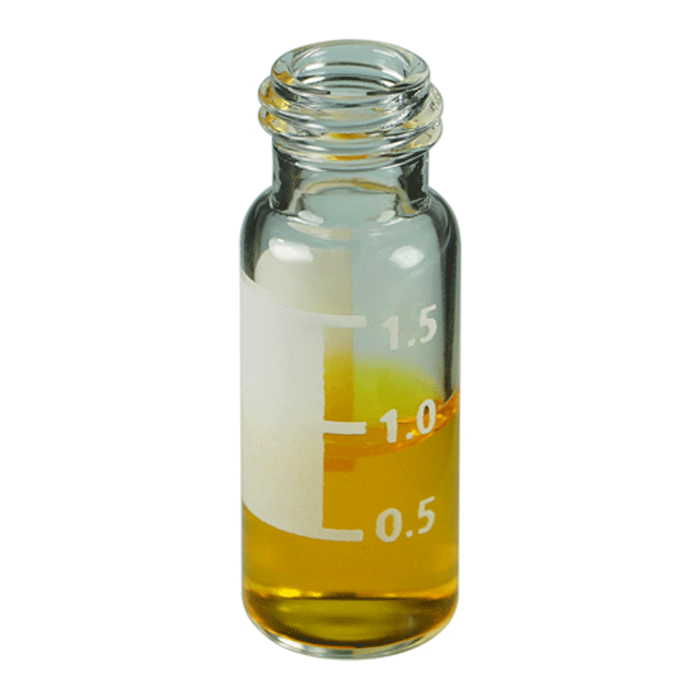
Vials, Screw Top, Glass. Clear, 2ml, with Write-On Patch and fill lines, Deactivated, 9-425mm threads, 12x32mm outer dimensions. For use as an autosampler vial. BASIK Brand. 100/PK.
Additional Information:
The 9502S‑E‑WDCV BASIK™ Deactivated Screw‑Top Autosampler Vial is an economical solution for laboratories that need glass deactivation with labeling capability while maintaining strict cost control. Manufactured from first hydrolytic, Class A borosilicate glass, each vial is chemically deactivated (silanized) to reduce surface activity and improve recovery of adsorption‑prone analytes.
The wide‑mouth ND9 (9-425) design supports easy manual or automated filling, while integrated write‑on patches and fill lines provide durable sample identification. This vial delivers practical adsorption control and usability for routine analytical workflows without the cost of premium surface chemistries.
Key Features
Deactivated / Silanized Borosilicate Glass
First hydrolytic, Class A glass
Chemically deactivated surface minimizes analyte adsorption
Improves recovery for basic and surface‑active compounds
Wide‑Mouth ND9 (9‑425) Design
Easier filling and reduced handling variability
Compatible with standard ND9 caps and septa
Well suited for high‑throughput use
Write‑On Patch and Fill Lines
Epoxy paint labeling surface for reduced smearing with solvents
Fill lines support consistent sample preparation
Practical identification for routine lab work
Budget‑Focused Performance
Cost‑effective alternative to premium deactivated vials
Ideal for routine methods where adsorption control is required
Designed for dependable daily operation
When to Choose This Vial
Choose the 9502S‑E‑WDCV when you need:
Deactivated glass for adsorption‑prone analytes
Durable labeling for routine sample handling
Lowest possible cost within a deactivated, write‑on vial option
This SKU is a practical step up from untreated BASIK™ vials without moving into premium surface‑treated categories.
Typical Applications
HPLC, UHPLC, and LC‑MS autosampling
Basic or adsorption‑sensitive analytes
Routine analytical workflows
Budget‑conscious laboratories