
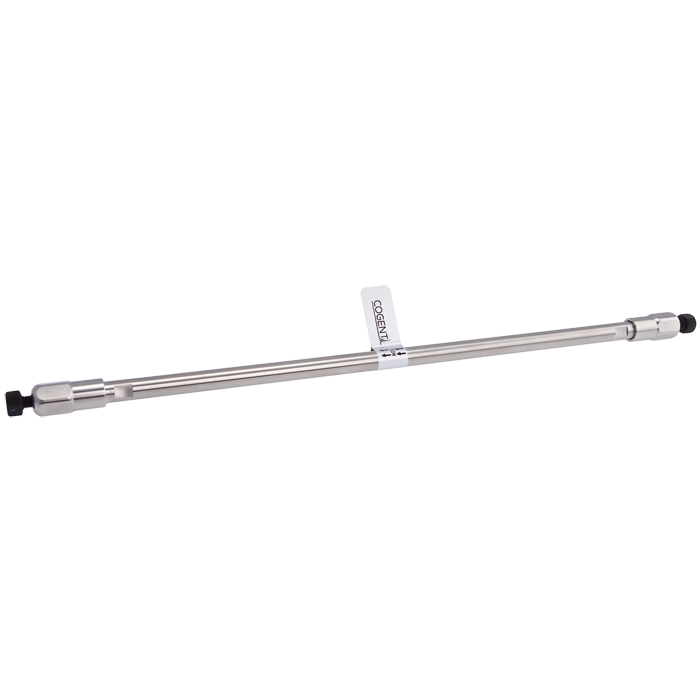
HPLC Column, RP C18, 3um, 4.6mm ID x 250mm Length, 100A. Cogent Brand. 1 EA.
Additional Information:
The 68318‑25P Cogent RP C18 HPLC Column is designed for maximum separation performance, utilizing 3 µm particles and fully double end‑capped C18 bonding to deliver high efficiency, strong retention, and consistent analytical results.
Manufactured with high‑purity silica and traditional octadecylsilane (C18) bonding, this stationary phase:
Uses complete end‑capping to minimize silanol activity
Improves peak shape for polar and basic analytes
Provides robust, reproducible chromatography across methods
This column is widely used as a starting point for new method development and as a reliable substitute for USP L1 columns using 3 µm stationary phases.
250 mm Length – Maximum Separation & Retention
Highest resolving power in the 4.6 mm RP C18 column range
Maximizes peak capacity for complex mixtures
Ideal for closely related analytes and difficult separations
Provides longer retention for hydrophobic compounds
Best suited for final method optimization and high‑resolution analysis
This column is selected when shorter columns cannot provide adequate separation or purity.
4.6 mm ID – Standard Analytical Performance
Industry‑standard HPLC column format
Compatible with all conventional HPLC systems
Typical flow rate range: ~0.8–1.5 mL/min
Optimal starting range: ~1.0–1.2 mL/min
Provides:
Strong detector response
High reproducibility
Easy method transfer between instruments
Why Choose RP C18 (3 µm)
Balanced Efficiency & Pressure
More efficient than 5 µm columns
Lower backpressure than sub‑2 µm UHPLC columns
Ideal balance between performance and instrument compatibility
Reliable Hydrophobic Retention
Strong reversed‑phase retention for hydrophobic and neutral compounds
Excellent for long‑chain fatty acids and similar analytes
Method Development & USP Compatibility
Ideal for new method development
Suitable as a USP L1 alternate column
Flexible platform for method optimization
Cogent RP C18™ Advantages
Fully End‑Capped Surface
Minimizes secondary interactions
Improves peak symmetry
Better performance for basic analytes
High Purity Silica
Consistent chromatography
Reduced variability between runs and columns
Cost‑Efficient Operation
Lower pressure requirements vs UHPLC columns
Reduced solvent waste compared to multiple shorter runs
Lower cost per analysis
Typical Applications
Pharmaceutical and QC analysis
Hydrophobic and neutral compound separations
Long‑chain fatty acids
Complex multi‑component mixtures
Method development and validation
USP L1 reversed‑phase methods
Important Usage Notes
Compatible with standard HPLC systems
Monitor pressure for long column methods and viscous solvents
Ideal for maximum‑resolution analytical workflows
Best suited when separation performance is more critical than run time