
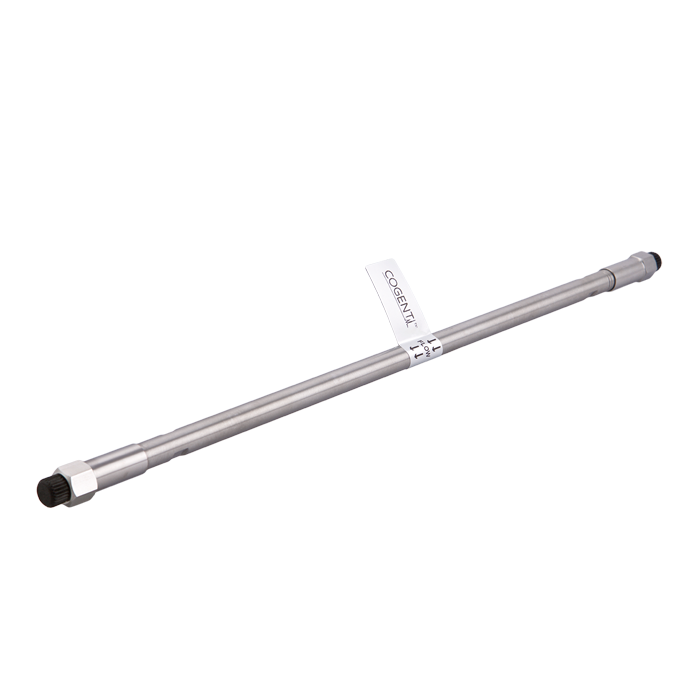
HPLC Column, Diamond Hydride, 4 um, 4. 6mm ID x 250 mm Length, 100 A. Cogent TYPE-C Brand. 1 EA.
Additional Information:
The 250 mm column length provides a substantial increase in theoretical plates and peak capacity compared to shorter columns, enabling:
Maximum resolution of closely related or co‑eluting polar compounds
Improved separation confidence in complex sample matrices
Enhanced method robustness for regulated or validated workflows
The 4.6 mm internal diameter maintains traditional analytical‑scale operation, offering:
Higher sample loading capacity
Compatibility with standard injection volumes and UV detectors
Straightforward integration with existing HPLC infrastructure
This configuration is ideal when separation quality is the top priority and run time is a secondary consideration.
Diamond Hydride™ Stationary Phase Advantages
Manufactured using Cogent TYPE‑C™ silica hydride technology, the Diamond Hydride stationary phase delivers distinct advantages over conventional bonded‑silica HILIC phases:
Faster equilibration, even at high organic content
Stable and reproducible retention mechanisms, reducing method variability
Long column lifetime, supporting routine and long‑term analytical programs
The silica hydride surface supports mixed‑mode interactions that enhance selectivity for difficult analytes.
This column is routinely selected for:
Small, highly polar molecules
Amino acids and organic acids
Polar and non‑polar peptides
Metabolites and other challenging biomolecules
Enhanced Separation for Demanding Methods
The extended 250 mm bed length is especially beneficial when:
Shorter columns do not provide sufficient resolution
Additional retention time is required for peak discrimination
Methods demand maximum confidence in peak purity and identity
This makes the 70000‑25P a strong choice for research‑grade HILIC methods, regulated assays, and advanced method development.
Detection Flexibility
While commonly paired with UV and conventional detectors, the 70000‑25P is also compatible with LC‑MS workflows where standard analytical flow rates are acceptable or where post‑column splitting is employed.
System Requirements
Typical operating flow rates: ~0.8–1.5 mL/min, depending on mobile‑phase viscosity and method conditions
Compatible with all conventional analytical HPLC systems
No special low‑flow or UHPLC‑specific pump capability required
Flow rates may be optimized further based on desired resolution, pressure limits, and detector configuration.