
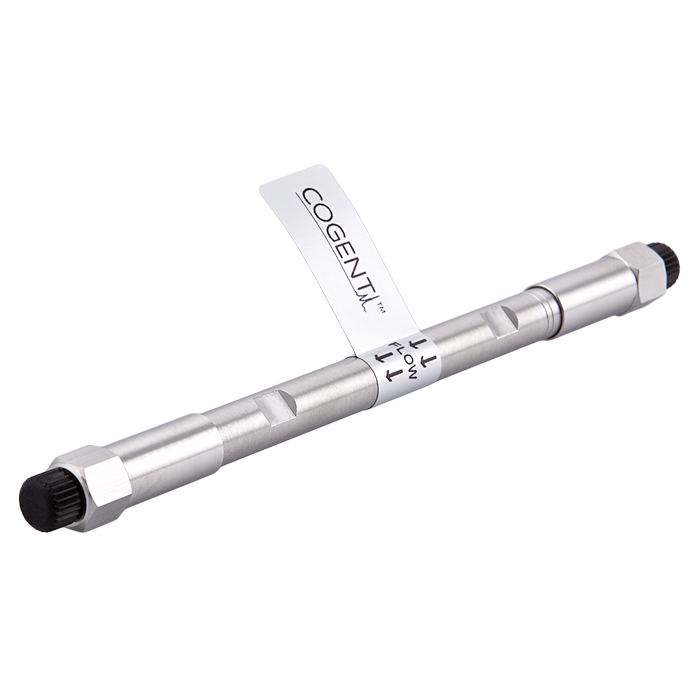
HPLC Column, Diamond Hydride, 4 um, 4.6 mm ID x 100 mm Length, 100 A. Cogent TYPE-C Brand. 1 EA.
Additional Information:
The 70000‑10P Diamond Hydride HPLC Column is a standard‑bore, intermediate‑length HILIC column designed for applications where short, 50 mm columns do not provide sufficient resolution, but where users want to retain the simplicity and robustness of traditional 4.6 mm ID HPLC operation.
Balanced Resolution and Throughput
The 100 mm column length provides a meaningful increase in separation efficiency compared to 50 mm formats, delivering:
Improved resolution for closely eluting polar compounds
Greater peak capacity for complex samples
More flexibility during method development
At the same time, the column maintains reasonable run times, making it suitable for routine analytical workflows where productivity remains important.
Advantages of the 4.6 mm ID Format
The 4.6 mm internal diameter is ideal for laboratories that:
Use standard HPLC systems and UV detectors
Require higher sample loading capacity
Prefer familiar flow rates and injection volumes
Do not need the reduced solvent flow associated with LC‑MS‑specific formats
This makes the 70000‑10P particularly well suited for QA/QC laboratories, routine HILIC methods, and method scaling activities.
Diamond Hydride™ Stationary Phase Performance
Manufactured using Cogent TYPE‑C™ silica hydride technology, the Diamond Hydride stationary phase delivers:
Excellent selectivity for polar and moderately polar analytes
Faster equilibration compared to conventional bonded silica HILIC phases
Robust column lifetimes with stable retention behavior
This chemistry performs reliably for:
Amino acids
Polar and non‑polar peptides
Metabolites
Other challenging polar analytes analyzed under HILIC conditions
Practical and Economical Choice
The 70000‑10P operates comfortably on any conventional HPLC system, requiring no specialized hardware or low‑flow capabilities. It offers a practical balance between resolution, robustness, and operational simplicity, making it a dependable option for laboratories transitioning from short columns to more resolving HILIC methods.