
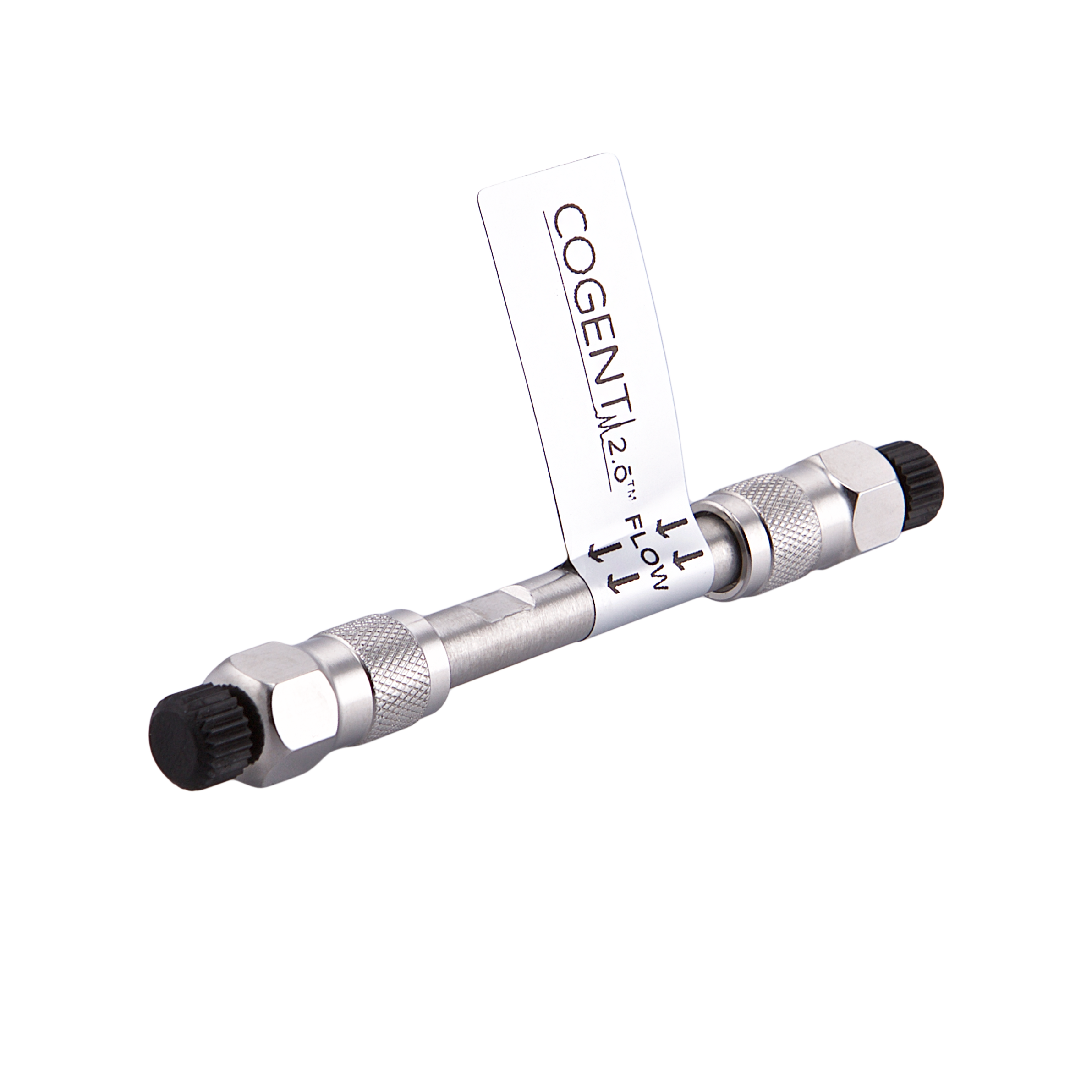
HPLC Column, UDC Cholesterol 2.o, 2.2um, 2.1mm ID x 50mm Length, 120A, High. Cogent TYPE-C Brand. 1 EA.
Additional Information:
The 69269‑05P‑2 Cogent UDC‑Cholesterol 2.0 HPLC Column delivers unique shape‑based selectivity using 2.2 µm TYPE‑C™ silica hydride particles functionalized with a cholesterol‑terminated ligand.
This stationary phase consists of an 11‑carbon chain bonded directly to silica hydride with a cholesterol group at the terminus, creating structured interaction regions that form “molecular slots.” These allow compounds to be separated not only by hydrophobicity, but by molecular shape and steric fit, providing selectivity unavailable from traditional reversed‑phase columns.
Unlike conventional silica phases:
No end‑capping is required (direct Si–C bond)
Reduced secondary interactions
Improved reproducibility and stability
This column supports multiple separation modes:
Reversed Phase
Normal Phase
HILIC
50 mm Length – Speed & Throughput
Optimized for rapid separations and short run times
Lower backpressure compared to longer columns
Ideal for high‑throughput screening and fast LC‑MS analysis
Supports efficient method development workflows
Flow Rate & System Requirements (2.1 mm ID)
Requires precise low‑flow UHPLC capability
Typical flow rate range: ~0.2–0.4 mL/min
Optimal starting range: ~0.25–0.35 mL/min
Requires:
UHPLC system capable of stable, low‑flow delivery
Low‑volume flow cell detector
Accurate, low‑volume injection system
⚠️ Standard HPLC systems must be capable of reliable low‑flow operation to achieve proper performance.
Why Choose UDC‑Cholesterol™
Shape & Isomer Selectivity
Separates compounds based on 3D structure and steric interactions
Excellent for isomers and structurally similar compounds
Highly Hydrophobic Retention
Strong interaction with hydrophobic analytes
Improved retention for difficult compounds
Flexible Selectivity Control
Selectivity can be tuned by:
Temperature changes
Mobile phase composition
Enables fine control over separation conditions
Cogent TYPE‑C™ Technology Advantages
Silica Hydride Surface
Direct Si–C bonding (no end‑capping required)
Reduced silanol activity
Improved peak shape for basic and polar compounds
Faster Equilibration
Rapid re‑equilibration between runs
Increased analytical throughput vs conventional RP and HILIC phases
Robust Column Lifetime
Resistant to hydrolysis
Stable across multiple solvent systems
Long operational lifetime under demanding conditions
Typical Applications
Steroidal compound analysis
Structural isomer separations
Lipids and highly hydrophobic molecules
Peptides, proteins, and oligonucleotides
Compounds difficult to retain or resolve on conventional RP columns
Important Usage Notes
Designed for UHPLC / low‑flow applications
Requires precision pumping and low‑volume detection systems
Use temperature and solvent optimization to tune selectivity
Ideal when traditional C18/C8 phases cannot resolve isomers