
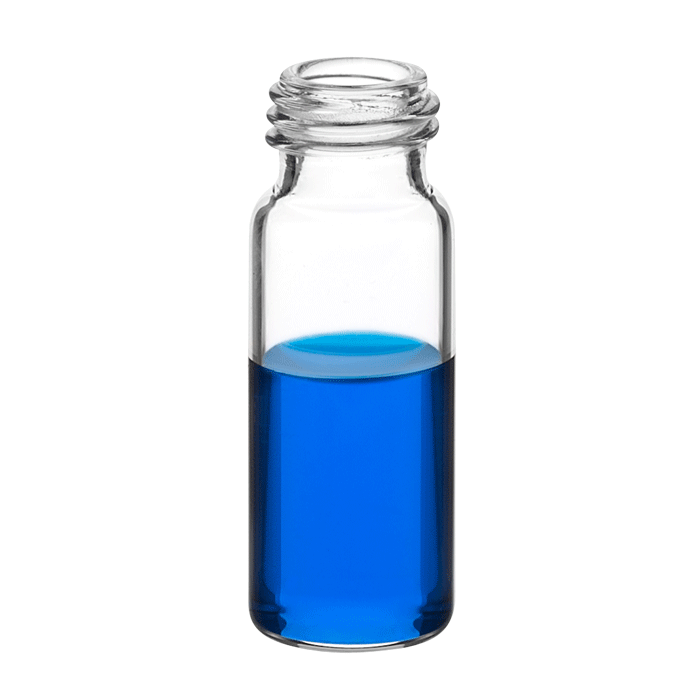
Vials, Screw Top, Glass. Clear, 2ml, 9-425mm threads, 12x32mm outer dimensions. For use as an autosampler vial. RSA Brand. 100/PK.
Additional Information:
The 9509S‑0CV‑RS RSA™ Screw‑Top Autosampler Vial is one of the most widely used and trusted clear glass vials for routine and advanced chromatography workflows. Manufactured from first hydrolytic, Class A, Type‑33 reduced surface activity borosilicate glass, this vial delivers consistent performance, low adsorption, and reliable autosampler compatibility.
Designed for laboratories that require accuracy, reproducibility, and chemical inertness, this vial minimizes analyte loss and avoids sodium contamination that can interfere with sensitive analytical results. Precision‑controlled bottom geometry ensures maximum sample recovery while protecting autosampler needles during repeated injections.
Key Features
RSA™ Reduced Surface Activity Glass
First hydrolytic, Class A, Type‑33 borosilicate glass
Certified reduced surface activity for minimal analyte interaction
Consistent glass chemistry from batch to batch and vial to vial
Low Adsorption, Sodium‑Free Performance
Minimizes adsorption of basic and polar compounds
Does not leach sodium (Na) into sample solutions
Maintains sample pH integrity, even for sensitive analyses
Precision‑Engineered for Autosamplers
Optimized bottom depths and vial heights
QC‑controlled to ensure maximum sample recovery
Protects autosampler needles from impact or damage
Why Choose RSA™ Screw‑Top Vials?
RSA™ autosampler vials are engineered to provide reliable, reproducible results across a wide range of chromatographic applications. Their stable surface chemistry makes them especially well suited for:
Routine analytical workflows
Regulated and validated methods
Trace‑level and low‑abundance analytes
pH‑sensitive compounds
Each production lot is tested and certified for reduced surface activity, giving laboratories confidence in long‑term method consistency.
Typical Applications
HPLC, UHPLC, and LC‑MS autosampling
Pharmaceutical and bioanalytical testing
Environmental analysis
Routine and high‑throughput chromatography