
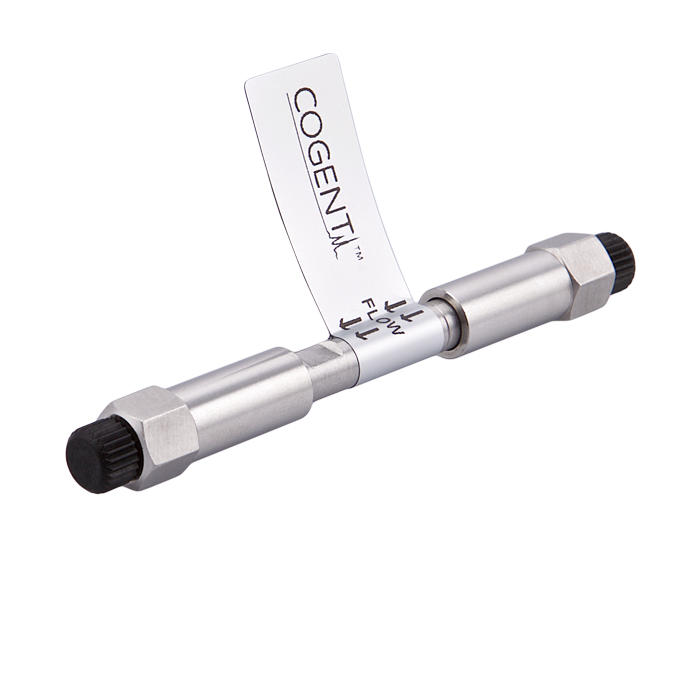
HPLC Column, Amide 2.o, 2.2 um, 2.1 mm ID x 100 mm Length, 120 A. Cogent TYPE-C Brand. 1 EA.
Additional Information:
High-Resolution Amide HILIC Column for Polar Analyte Separations
The 40236-10P-2 Amide HPLC Column is manufactured using Cogent TYPE-C™ silica hydride technology and is designed for demanding HILIC applications requiring increased retention and chromatographic resolution. The amide stationary phase provides strong interaction with highly polar analytes, making it an excellent choice for compounds that are often difficult to retain using traditional reversed-phase chromatography.
Combining advanced silica hydride support material with 2.2 µm high-efficiency particles, this column delivers excellent peak shape, fast equilibration, and reproducible performance. The longer 100 mm column length provides additional theoretical plates and enhanced separation capability compared to shorter columns, making it particularly useful for complex sample matrices.
Ideal for HILIC Applications Involving Polar Compounds
The Amide stationary phase is widely used for compounds containing hydroxyl, amine, and other highly polar functional groups. Typical applications include:
Carbohydrates and simple sugars
Sugar alcohols
Amino-containing compounds
Polar metabolites
Pharmaceutical compounds
Food and beverage ingredients
Biological and biochemical analytes
Other highly polar compounds requiring HILIC retention
The unique TYPE-C™ silica hydride surface helps deliver robust retention characteristics and excellent reproducibility across a broad range of HILIC operating conditions.
Benefits of Cogent TYPE-C™ Amide Technology
Compared to many conventional silica-based HILIC columns, this technology offers:
Rapid equilibration between runs
Excellent run-to-run reproducibility
Consistent retention of highly polar analytes
Stable operation with high-organic mobile phases
Reduced variability associated with traditional water-rich surface layers
Long column lifetime and durable performance
These characteristics help simplify method development while improving long-term analytical reliability.
Why Choose the 2.1 mm ID × 100 mm Configuration
The 2.1 mm internal diameter format is commonly selected for LC-MS methods where sensitivity and reduced solvent consumption are important. The 100 mm column length provides increased resolving power compared to shorter columns, making it suitable for more challenging separations.
Key benefits include:
Improved chromatographic resolution
Increased peak capacity
Enhanced separation of closely eluting compounds
Reduced mobile-phase consumption
Excellent LC-MS and LC-MS/MS compatibility
Improved analytical sensitivity
This format is particularly useful when additional separation efficiency is required beyond what may be achieved with shorter column lengths.
Small Particle Technology for Maximum Efficiency
The 2.2 µm particle size produces high chromatographic efficiency, narrower peaks, and improved analyte detection. The combination of small particles and a longer column length provides excellent resolving power for complex HILIC separations while maintaining practical analysis times.
System Requirements and Flow Rates
The 2.1 mm ID format is optimized for low-flow analytical methods and LC-MS applications.
Typical flow-rate range (2.1 mm ID): approximately 0.2-0.3 mL/min
Requires an HPLC or UHPLC system capable of accurate low-flow delivery
Well suited for LC-MS and LC-MS/MS workflows
Longer column length may generate higher backpressure than shorter configurations
Actual operating conditions should be optimized based on mobile phase, temperature, and instrument capabilities
Contact MICROSOLV Customer Service for current availability, application guidance, and technical support.