
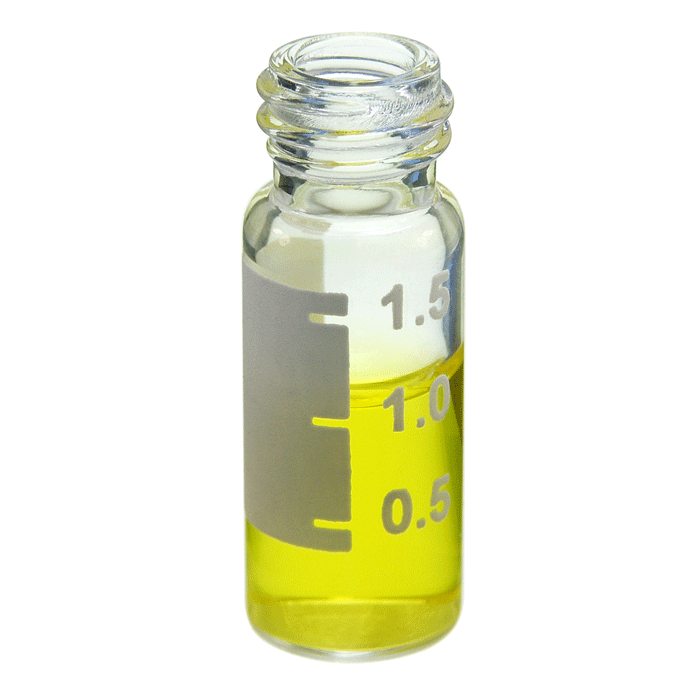
Vials, Screw Top, Glass. Clear, 2ml, with Write-On Patch and fill lines, 10-425mm threads, 12x32mm outer dimensions. For use as an autosampler vial. BASIK Brand. 100/PK.
Additional Information:
The 9503S‑E‑WCV BASIK™ Screw‑Top Autosampler Vial is an economical, wide‑mouth 2 mL glass vial designed for laboratories that prioritize ease of filling, clear labeling, and cost control. Manufactured from first hydrolytic, Class A borosilicate glass, this vial provides dependable chemical durability for routine chromatography and storage applications.
The 10‑425 (ND‑10) wide‑mouth opening allows convenient sample loading using pipettes or automated liquid handling systems, helping reduce spills and handling errors. Integrated write‑on patches and fill lines, applied using epoxy paint, provide durable labeling that resists smearing when exposed to common laboratory solvents.
This vial is a practical choice for budget‑minded laboratories that do not require reduced‑surface‑activity or specialty glass chemistries.
Key Features
Economical Borosilicate Glass Construction
First hydrolytic, Class A borosilicate glass
Clear glass for easy sample visibility
Suitable for routine analytical and storage workflows
Wide‑Mouth 10‑425 (ND‑10) Thread Design
Larger opening for easy filling and handling
Compatible with 10‑425 screw caps and septa
Supports manual and automated sample preparation
Write‑On Patch and Fill Lines
Epoxy paint write‑on surface for reduced smearing
Fill lines support consistent sample volumes
Simple labeling solution for routine laboratory use
Standard Autosampler & Storage Compatibility
12 × 32 mm format fits common autosampler trays
Suitable for autosampler injections or storage bottles
Designed for non‑critical analytical workflows
Why Choose BASIK™ Wide‑Mouth Write‑On Vials?
The 9503S‑E‑WCV is selected when laboratories need:
A low‑cost wide‑mouth 2 mL vial
Easy filling and handling during sample prep
Clear, durable labeling without premium features
Compatibility with ND‑10 (10‑425) closure systems
This vial is commonly used in routine HPLC labs, teaching environments, QC workflows, and high‑volume screening applications.
Typical Applications
Routine HPLC and LC autosampling
Sample preparation and method development
Quality control workflows
Teaching and research laboratories
Short‑term sample storage