
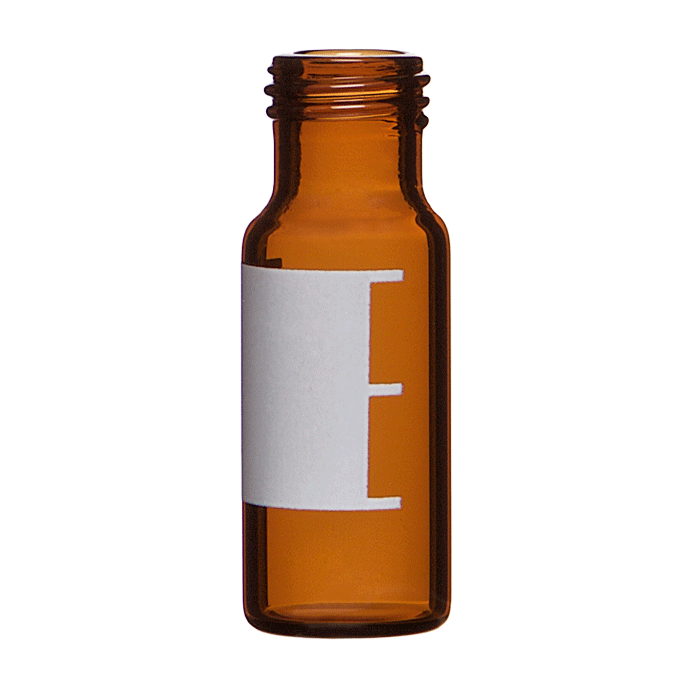
Vials, Screw Top, Glass. Amber, 2ml, with Write-On Patch and fill lines, Deactivated, 9-425mm threads, 12x32mm outer dimensions. For use as an autosampler vial. MICROSOLV Brand. 100/PK.
Additional Information:
The 9502S‑WDAV MICROSOLV™ Deactivated Amber Screw‑Top Autosampler Vial is designed for chromatography applications involving light‑sensitive and surface‑active analytes. Manufactured from first hydrolytic, Class A, Type N51A pharmaceutical‑grade borosilicate glass, each vial is amberized and chemically deactivated (silanized) to minimize analyte adsorption while protecting samples from light exposure.
This vial retains MICROSOLV’s proven wide‑mouth ND9 (9-425) design, allowing easy filling and consistent autosampler compatibility. Integrated write‑on patches and fill lines support clear labeling and repeatable sample preparation, even in solvent‑rich laboratory environments.
Key Features
Deactivated / Silanized Amber Borosilicate Glass
First hydrolytic, Class A, Type N51A pharmaceutical‑grade glass
Chemically deactivated surface reduces analyte adsorption
Amberized for protection of light‑sensitive compounds
Considered low actinic for photosensitive workflows
Wide‑Mouth ND9 (9‑425) Design
Facilitates easy pipetting and automated filling
Reduces spillage and handling variability
Compatible with all standard ND9 screw caps and septa
Write‑On Patch and Fill Lines
Epoxy paint labeling surface for reduced smearing
Resistant to typical chromatography solvents
Fill lines promote consistent sample volumes
Autosampler‑Optimized Geometry
Bottom depths and vial heights tightly controlled
Designed for consistent injection depth
Protects autosampler needles and improves reproducibility
When to Choose This Vial
The 9502S‑WDAV is recommended when workflows require both surface deactivation and light protection, including:
Basic or adsorption‑prone analytes
Light‑sensitive compounds
Low‑level or valuable samples where recovery is critical
It represents the highest level of protection within the 9502‑series autosampler vials.
Typical Applications
HPLC, UHPLC, and LC‑MS autosampling
Light‑sensitive pharmaceutical compounds
Adsorption‑prone or surface‑active analytes
Bioanalytical and analytical research workflows