
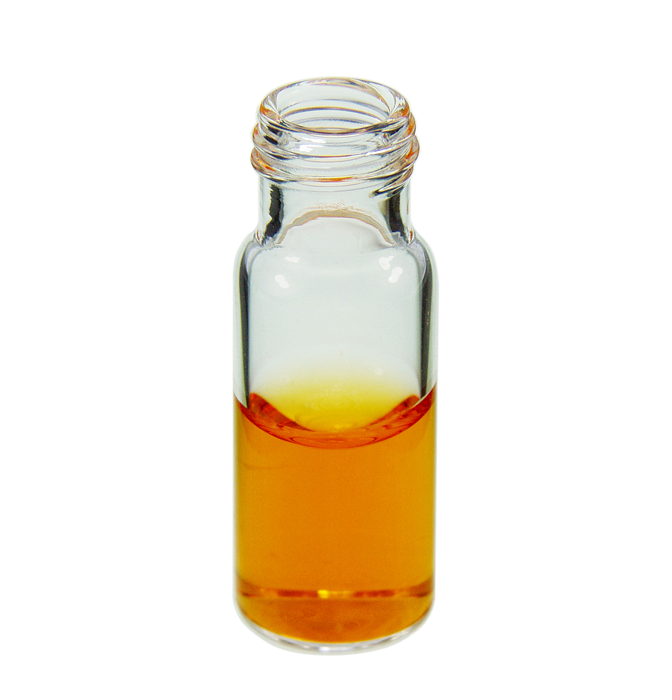
Vials, Screw Top, Glass. Clear, 2ml, 9-425mm threads, 12x32mm outer dimensions. For use as an autosampler vial or storage bottle. MICROSOLV Brand. 100/PK.
Additional Information:
The 9502S‑0CV MICROSOLV™ Screw‑Top Autosampler Vial is the most widely used and best‑selling autosampler vial in the MICROSOLV portfolio. Manufactured from first hydrolytic, Class A, Type N51A pharmaceutical‑grade borosilicate glass, this vial is designed to deliver reliable, consistent performance across virtually all chromatography workflows.
With its wide‑mouth ND9 (9‑425) opening, the vial allows easy and efficient filling by pipette or automated systems, reducing handling errors and improving workflow efficiency. Precision‑controlled vial geometry ensures consistent autosampler performance, protecting needles while maximizing sample recovery.
For many laboratories, this vial serves as the default standard for routine HPLC, UHPLC, and LC‑MS analysis.
Key Features
Pharmaceutical‑Grade Borosilicate Glass
First hydrolytic, Class A, Type N51A glass
Excellent chemical durability and cleanliness
Suitable for pharmaceutical, environmental, and analytical use
Wide‑Mouth ND9 (9‑425) Design
Easier manual and automated filling
Reduces spillage and handling variability
Compatible with all standard screw caps and septa
Autosampler‑Optimized Geometry
Bottom depths and vial heights are tightly controlled
Designed for consistent injection depth
Protects autosampler needles and improves reproducibility
Why This Is the Leading Autosampler Vial
The 9502S‑0CV has become the most popular autosampler vial because it offers the ideal balance of quality, usability, and value:
Proven compatibility with all major autosampler platforms
Simple, reliable design with no unnecessary features
Consistent performance across high‑volume, routine workflows
Cost‑effective solution for laboratories running large sample loads
Its widespread adoption makes it the reference vial against which many others are compared.
Typical Applications
HPLC, UHPLC, and LC‑MS autosampling
Routine analytical testing
Pharmaceutical and bioanalytical workflows
Environmental and food analysis
Sample preparation and short‑term storage