
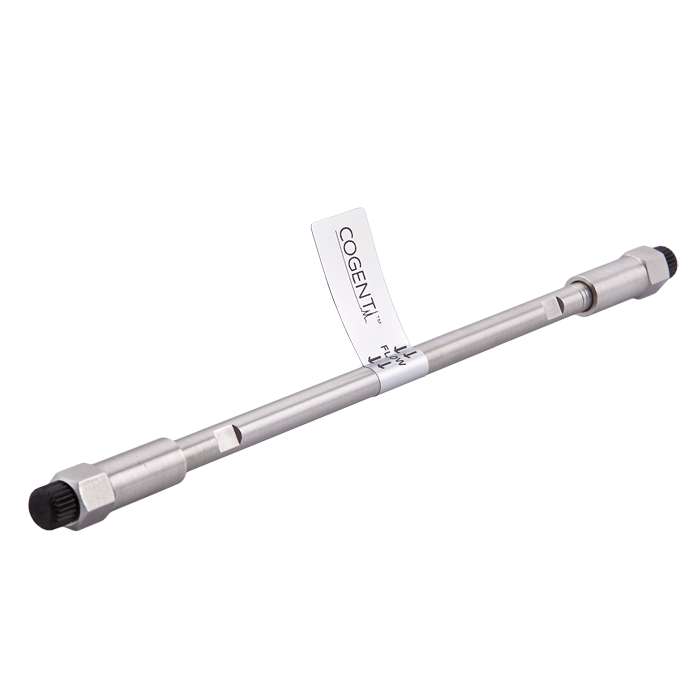
HPLC Column, UDC Cholesterol, 4um, 2.1mm ID x 150mm Length, 100A. Cogent TYPE-C Brand. 1 EA.
Additional Information:
The 69069‑15P‑2 Cogent UDC‑Cholesterol HPLC Column is engineered for maximum‑resolution separations, utilizing 4 µm TYPE‑C™ silica hydride particles modified with a cholesterol‑terminated ligand.
This stationary phase incorporates an 11‑carbon chain directly bonded to silica hydride with a terminal cholesterol moiety, creating structured interaction regions that act as molecular “slots.” These enable separation based on molecular geometry, steric orientation, and shape, rather than hydrophobicity alone—providing unique selectivity not achievable with conventional reversed‑phase columns.
Key structural advantages:
Direct Si–C bonding eliminates need for end‑capping
Reduced silanol interactions
Improved reproducibility and robustness
This column supports multiple chromatographic modes:
Reversed Phase
Normal Phase
HILIC
150 mm Length – Maximum Resolution for LC‑MS
Highest resolving power within the 2.1 mm (4 µm) column range
Ideal for complex mixtures and difficult separations
Maximizes isomer separation and peak capacity
Preferred for LC‑MS workflows requiring highest resolution
Longer run times compared to 50 mm and 100 mm formats
Flow Rate & System Requirements (2.1 mm ID, 4 µm)
Typical flow rate range: ~0.2–0.4 mL/min
Optimal starting range: ~0.18–0.28 mL/min for maximum resolution
Requires:
Reliable low‑flow HPLC or LC‑MS system
Low‑volume detector flow cell
Stable and precise flow delivery
⚠️ Standard HPLC systems must be capable of consistent low‑flow performance to achieve expected results.
Why Choose UDC‑Cholesterol™
Shape & Isomer Selectivity
Separates compounds based on 3D structure and steric interactions
Ideal for isomers and structurally similar analytes
Strong Hydrophobic Interaction
Highly hydrophobic stationary phase
Effective retention of lipids and difficult compounds
Tunable Selectivity
Selectivity controlled by:
Temperature adjustments
Mobile phase composition
Enables advanced method optimization
Cogent TYPE‑C™ Technology Advantages
Silica Hydride Surface
Direct Si–C bonding (no end‑capping required)
Reduced silanol activity
Improved peak shape for basic and polar compounds
Faster Equilibration
Faster than conventional RP and HILIC columns
Improved throughput despite longer column length
Robust Column Lifetime
Resistant to hydrolysis
Stable across varied solvents
Long operational durability
Typical Applications
Steroidal compound analysis
Structural isomer separations
Lipids and hydrophobic analytes
Peptides, proteins, and oligonucleotides
LC‑MS workflows requiring maximum resolution
Applications where C18 or C8 selectivity is insufficient
Important Usage Notes
Designed for LC‑MS and low‑flow analytical methods
Requires precise flow control for best performance
Use temperature and solvent composition to optimize selectivity
Best suited for complex separations requiring highest resolution